


Guest post by Ruth MacGilp, Fashion Campaign Manager at Action Speaks Louder
It may be getting dreich (cold, wet, gloomy) here in Scotland, but there is no doubt the world is heating up. Meanwhile, fashion’s climate impacts are only intensifying, despite it being a whole decade since the Paris Agreement. It’s enough to break a fashion girl’s heart. But the solutions to fashion’s role in the climate crisis might just be surprisingly simple...
COP30 is now in its second week, hosting more than 50,000 policymakers, activists, journalists, climate scientists, farmers, green entrepreneurs and yes, oil lobbyists, at the gateway to the Amazon in Brazil.
These UN climate summits are always fraught, but that tension is multiplied this year as climate impacts intensify, and those in power distract us from their failure to address these impacts by stirring up culture wars; encouraging us to turn against each other and not them. And of course, the world’s richest country, whose military alone is the world’s largest industrial polluter, has chosen to skip COP30 (guess who). Meanwhile Indigenous People have been protesting their lack of inclusion in—and violent exclusion from—the conference.
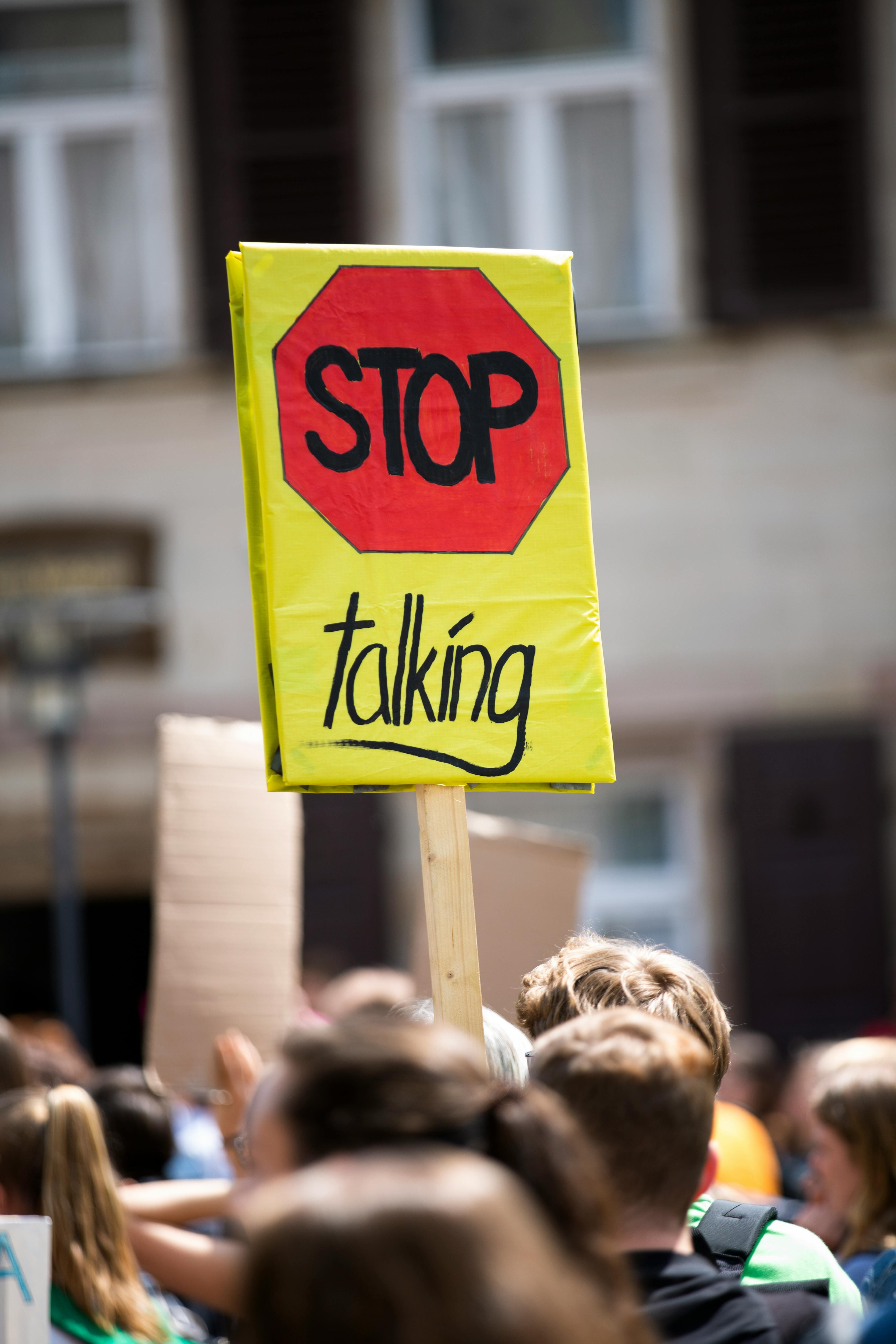
Nonetheless, we’re all hoping for clarity on how rich countries will deliver finance for adaptation and loss & damage, and clear time-bound roadmaps for fossil fuel phaseout and halting deforestation.
So what’s this got to do with fashion?
Well, according to Apparel Impact Institute, fashion’s footprint has reached an all-time high of 944 million tonnes of CO2e—2% of global greenhouse gas emissions. To stay within a 1.5°C trajectory, this needs to shrink by at least 45% in the next five years.

Have you heard of the UN’s Fashion Industry Charter for Climate Action? This coalition of major brands and manufacturers launched 7 years ago at COP24 as an effort to shrink fashion’s carbon footprint. Despite those good intentions, emissions are still projected to reach over 1.24 billion tonnes of CO2e in 2030.
Clearly, brands are way off track.
The Fashion Charter recently shared an open letter calling for policymakers to accelerate a just, clean energy transition at COP30. The letter advocates for more support from governments to increase renewable energy access, strengthen reporting requirements, scale up climate finance, and advance climate adaptation in order to help signatories meet their targets to phase out coal and reduce emissions. They say that key barriers to progress have been the lack of mandatory reporting standards, accessible global financing mechanisms, and policy support for renewable energy and electrification solutions.
At Action Speaks Louder, together with my fellow campaigners at Fashion Revolution and Stand.earth, we’ve published a response to this letter, which you can read in full here. In it, we commend the Fashion Charter’s support for an increased share of renewables in electricity grids and frameworks for corporate clean energy procurement and electrification. These are non-negotiables for decarbonising textile supply chains. It’s also hopeful to see an indication that the Fashion Charter recognises the importance of climate adaptation for worker wellbeing, which is crucial considering that rapidly rising temperatures are already impacting workers’ health, safety, and livelihoods. (Listen to Episode 251 of the Wardrobe Crisis Podcast for more on that.)
Our job is to hold those with the most power accountable for their impacts on those with the least. And the fashion industry, dominated by vast multinational conglomerates making well over $10 billion a year, is valued at $1.77 trillion - more than than the GDP of Australia.
Clearly, brands can afford to invest in protecting the people in their supply chain, whose work their profits depend upon. So what are they waiting for?
TO DO LIST
Here are our key recommendations for fashion industry leaders to ramp up their climate ambition, at COP30 and beyond:
Targeted Policy Advocacy for Specific Geographies
Beyond general global letters, Fashion Charter signatories have the influence to communicate directly with policymakers in specific countries in order to translate the asks of this letter into concrete policy decisions. This applies to major sourcing countries, such as China, Bangladesh, and Vietnam, as well as consumer hubs like the EU and US. Transparent, disaggregated reporting on these policy advocacy efforts should be shared openly. This is because we know that strategic, location-specific advocacy by fashion brands can help deliver transformative change, such as H&M and Nikes’ recent advocacy for Vietnam’s recently enacted DPPA (direct power purchase agreement), which will enable manufacturers to directly source renewable energy to power their factories.Strengthened Fashion Charter Commitments
While stating an intention to share ‘updated language and guidance’, the letter falls short of explicitly committing signatories to increased ambition to meet the increased stakes of the climate crisis. The Fashion Charter should build on existing commitments, such as requiring brands to develop regionally-specific and finance-backed just transition plans alongside workers and civil society. Signatories should also further develop more specific fossil fuel phaseout targets, with the electrification of thermal processes as the clear alternative to coal, instead of false solutions like fossil gas and unsustainable biomass.
Brand Investment in Decarbonisation and Climate Adaptation
Those with the deepest pockets must pay their fair share for climate action. Solutions for supply chain decarbonisation and climate adaptation are widely commercially available now, and any brand waiting for perfect policy conditions to start investing is doomed to fail. The Fashion Charter has an opportunity to mobilise brands to invest in best-practice proven solutions, such as industrial heat pumps.
Even as political headwinds challenge sustainability narratives, fashion brands must double down on meaningful policy advocacy efforts and invest in both climate mitigation and adaptation.
To find out more about fashion’s climate progress ,and the actions brands must take to safeguard the future of their business on planet Earth, by checking out Fashion Revolution’s 2025 What Fuels Fashion report and Stand.earth’s 2025 Fossil Free Fashion Scorecard.

Love this. I focus on slow fashion and conscious wardrobe building on my Substack — happy to connect with others who care about sustainability and style.
Thank you for this call to action for the fashion industry, Ruth — and thank you Clare for publishing this piece on your platform! This is a vital reminder we need for the industry 💚