

Exclusive! Inside Shein
Also, how other brands are following their lead

It was David Hachfeld who told me about Lefties. I’d somehow managed not to know about Zara’s answer to Shein.
Have you heard of it?
Lefties is taking off in Europe, and expanding into new markets (Mexico, Egypt, Saudi, UAE). The brand’s IG bio reads “LEFTIES EVERYWHERE, ON EVERYONE™” and the site features influencers spruiking faux fur jackets for €30, satin midi skirts for €15. These prices aren’t as low as Temu’s, but they make Zara look luxury. Mind you, Amazon Haul puts all this in the shade.
Haul launched in Australia in August, with $1 flash deals and up to 80% off its already dirt-cheap future landfill. According to Retail Insight Network, there are now more than 1 million items on the global site priced under $10. And now Shein is copying itself, with a spinoff brand targeted at subcultures presumably turned off by the main line. Romwe - “your go-to for all things alt” - peddles plastic goth looks, fake grunge and punk without the DIY.
Some retail experts reckon the likes of H&M and Zara have become “legacy retailers” that can’t compete with the new super-cheapies, so their best option is to shift towards premium. Case in point: Uniqlo hiring Claire Waight Keller. Or Gap going Goop.
But I don’t think cheap is leaving any time soon; there’s just more space for the newbies.
Though clearly not in the Shein league in terms of scale - “with hundreds of styles dropping every week” vs. Shein’s 10k a week (YES, YOU READ THAT RIGHT 10,000) - the Australian brand White Fox is rising. Founder Georgia Contos hit the Sydney news this week for her spenny home reno. A few years ago she was flogging cheap bikinis on eBay. Today her brand has more IG followers than Lefties and is thought to be worth around $2 billion, built primarily on a fierce influencer marketing strategy. The site has links to join their student ambassador program but no word on sustainability.
There’s a certain inevitability about all this.
“We are [living] in fashion capitalism, and fashion capitalism is driven by a profit incentives,” says David on the new Wardrobe Crisis, Ep 251: Inside Shein. To varying degrees, Shein’s business model “obviously is being copied by other companies”.
So what does it mean for the workers in Guangzhou who make these clothes?
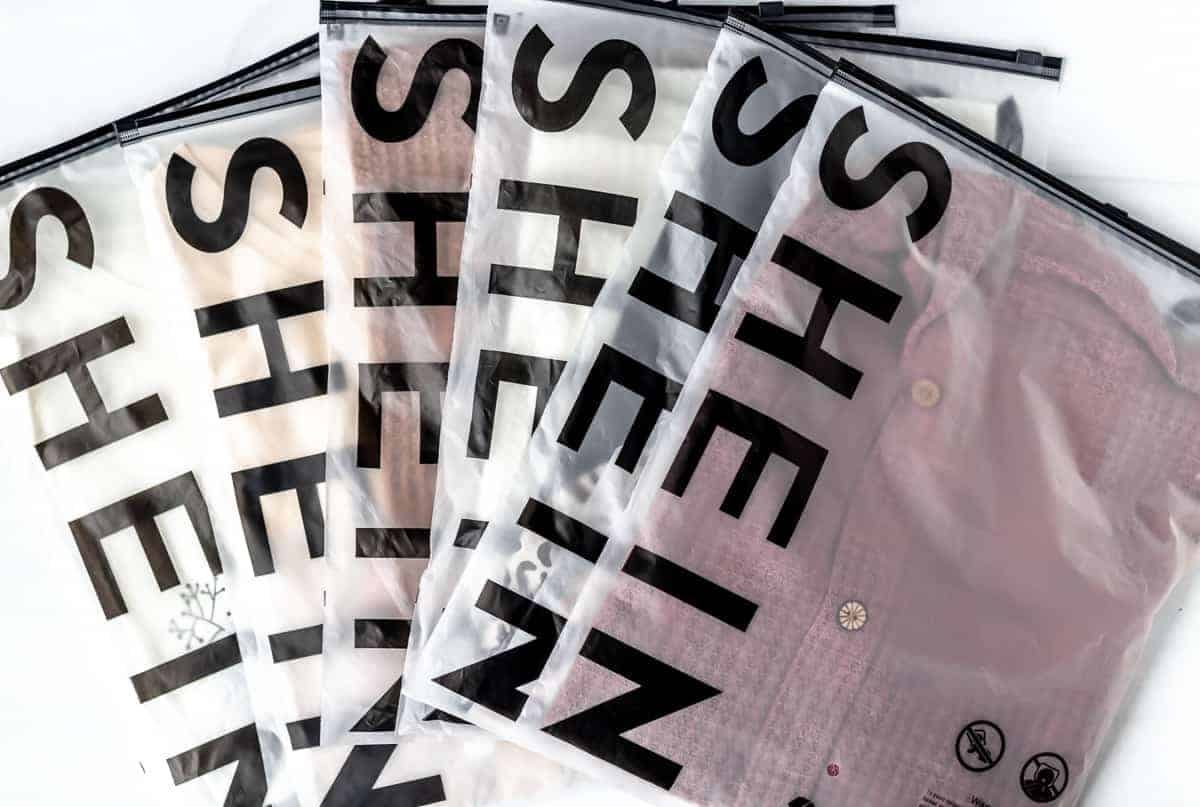
Lately, Shein has been spinning sustainability rhetoric, talking about “working hard to drive continued progress toward our sustainability and social commitments, and increase transparency”. They claim to be “a responsible corporate citizen that improves lives in the communities we reach”. Do we believe them? Or is unethical simply part of their business model?
Find out
What David told me was eye-opening, to say the least. And in an exclusive I’m still pinching myself over (remember, Wardrobe Crisis is proudly independent, i.e. a team of one, funded by Substack subscribers) I also got to interview one of the undercover researchers who’d secretly met with workers on the ground. We're calling them ‘R’ and their identity has been disguised.
Listen on Apple here:
Or Spotify here:
David Hachfeld is a fashion supply chains expert at Public Eye, a Swiss NGO founded in 1968 to hold big business to account. Public Eye has published two investigations on Shein’s Guangzhou supply chain, informing much of what we know today about how the company operates.
During covid, they set out to investigate how e-commerce was reshaping the fashion economy, explains David. They focused on China, “because Chinese e-commerce was 5 years ahead”. Shein emerged as the clear leader, although, he admits, at that time the name “didn’t ring a bell” for most. While Gen Z shoppers were all over it, Shein was barely on the NGO or policy radar back then.
“We found it really interesting how fast they were developing their business model and their tactics, also just catering to the global market, not to China, and we thought: let’s go deeper.”
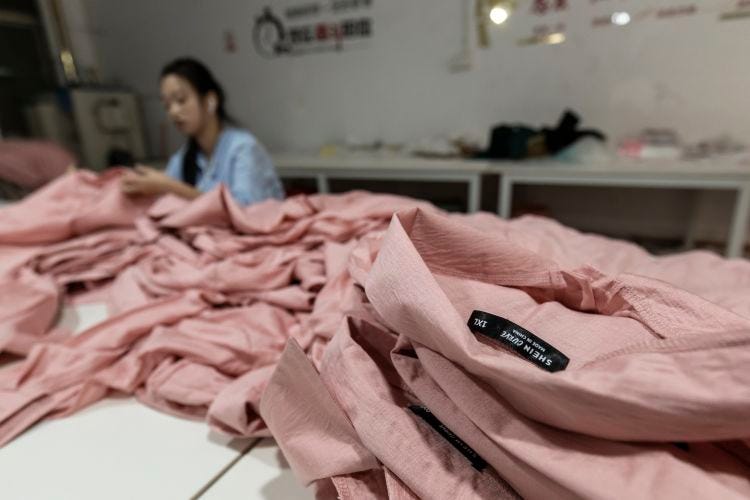
Public Eye’s first report, Toiling Away for Shein, was published in November 2021. It detailed the results of undercover interviews with garment and logistics workers, conducted by partners on the ground. It dug into who owns the company and its recipe for success, and revealed for the first time where and how the brand’s clothes are made, and a stark picture of worker exploitation.
“I work every day from 8 in the morning to 10.30 at night and take one day off each month. I can’t afford any more days off because it costs too much.” - Shein contractor, via Public Eye
After that, the deluge. Long term WCP listeners may remember the first time I covered Shein back in January 2022. Re-listen to Ep 153 here. My guests were Meaghan Tobin and Louise Matsakis, the American journos behind a viral investigative piece for Rest of World that delved into the Shein’s marketplace model & algorithim-based approach to design. If you can call it design. Essentially they scrape the internet for inspirations and churn out thousands of styles per day based on what celebrities and sometimes private individuals are wearing on social media. Or rip off small designers.
Then in 2022, a UK Chanel 4 doco filmed undercover at Chinese factories contracted by Shein. The headline allegation: 18-hour days, & piece rates of 3p an item.
Shein responded to all this, acknowledging some breaches and committing big bucks to fixing things. Details here.
“Shein came up saying the situation is not actually so bad… there have been improvements,” says David. “And we thought yeah, maybe. So let’s go back. Let’s go back to the same places, again to talk to workers, to ask them: are there any substantial improvements in your working conditions.” He points out that just because things are bad, doesn’t mean they have to be bad forever. “It’s a choice of companies how they behave, how they structure their production, and it can change …we wanted to give them a chance.” So what did they discover?
Workers are still paying the price for Shein’s success. To 75-hour working weeks, piece rates and no contracts, we can add secrecy, opaque financial operations and a general air of mystery around its billionaire founder and how the brand does business.
This is the story they don’t want told.
Listen to the new podcast & tell me your thoughts. I’d love to know what you make of it.
Clare xx
P.S. I love you
P.P.S. No Black Friday discounts here. An annual subscription to Wardrobe Crisis is fantastic value all year round! See below :)
Paid subscriptions power the podcast, helping to keep it ad-free and free for all to listen. To support the show, consider becoming a free or paid subscriber.
Thank you for this piece and the podcast, will recommend it in one of my next newsletter. My goodness where are we heading to?
Sigh.