


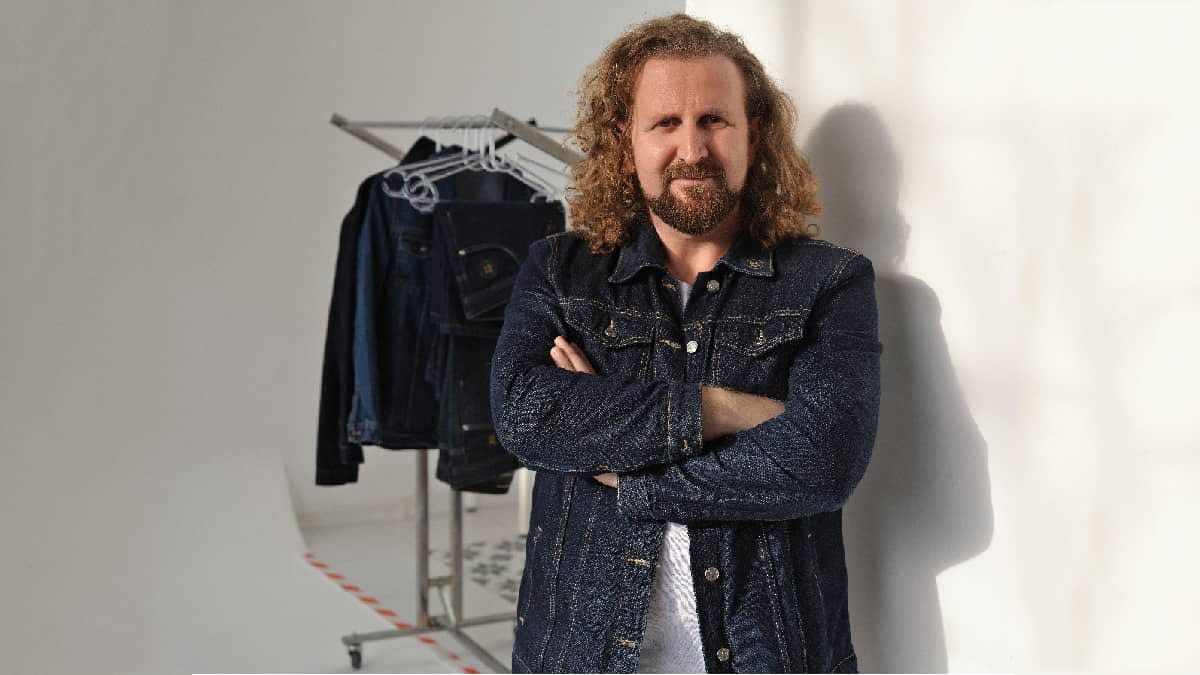
Bego Demir was 15 years old when he first went to work in a Turkish denim factory supplying Tommy Hilfiger. “We were sleeping in the factory … because people who had other options would not do this job,” he tells me on the podcast this week.
Series 13 has landed
And it’s all about workers rights.
Episode 279 reminds us of the long history of exploitation in the denim supply chain and unpacks a creative new strategy from Clean Clothes Campaign to hold brands to account.
Bego’s job was sandblasting - a technique, now outlawed in the EU, employed to give factory-fresh denim the illusion of being long-loved and lived-in.
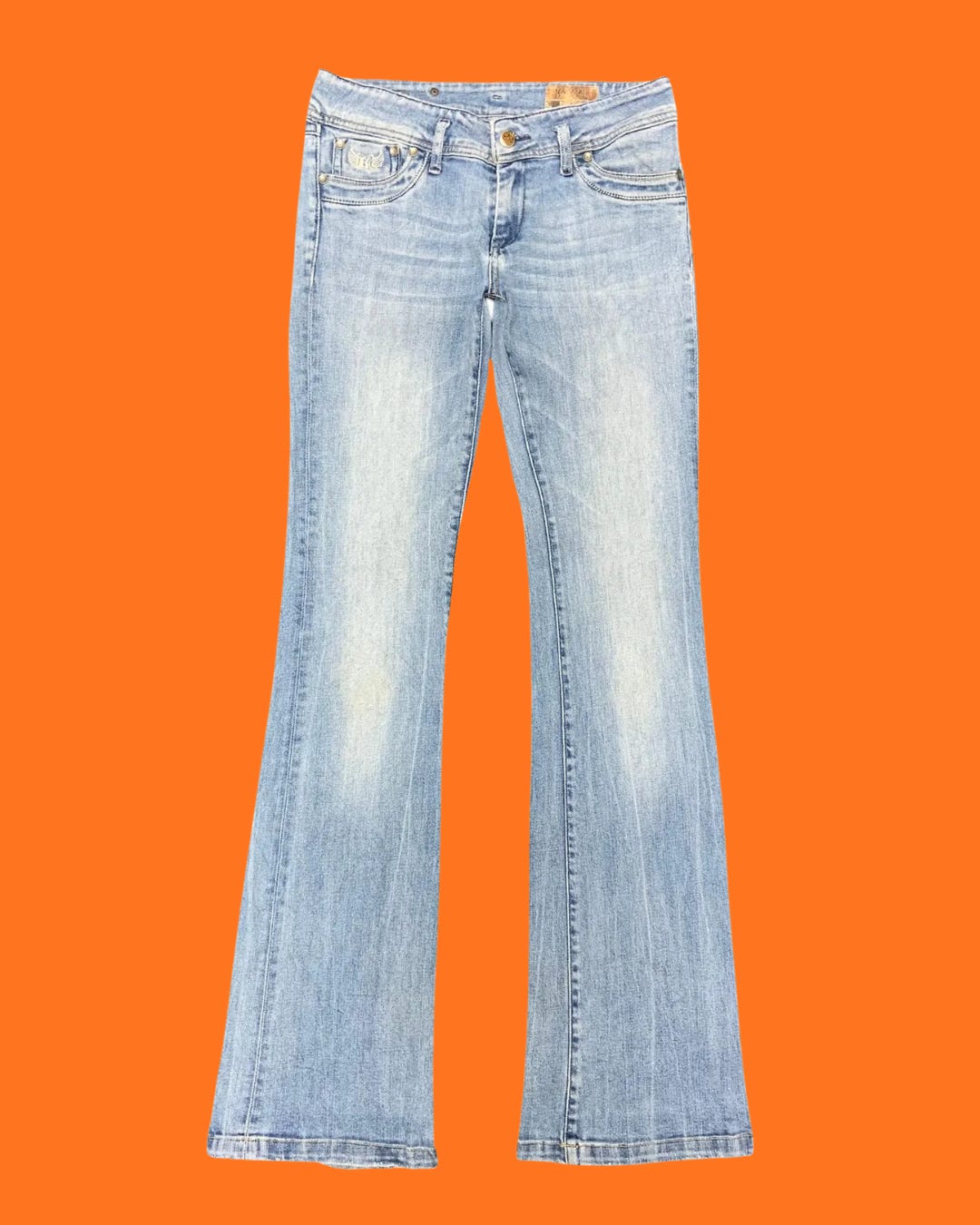
“The people who were working in sandblasting were people in need,” says Bego, explaining that in noughties Istanbul, they included immigrants from Romania and Iran (often undocumented), and internal migrants from economically disadvantaged areas of Eastern Anatolia.
He recalls being so covered in dust at the end of each shift, “people would not recognise me”.
Showering fixed that, but could not remove the crystalline sand particles clogging up his lungs. Today Bego lives with incurable silicosis. “If it’s triggered, I could be dead within six months.”
(For Australian listeners, this might ring bells: it’s the same disease suffered by hapless tradies who, before last year’s ban, risked their health installing ‘engineered stone’ benches in the nation’s kitchens. Researchers at Monash University estimate annual cost of silicosis-related payments to workers in Victoria alone will be $30m by 2031.)
In 2008, Bego was part of a group that founded the Denim Sandblasting Workers Solidarity Committee in Türkiye, which eventually resulted in the practice being outlawed. Good news.
But that doesn’t mean everything is safe for workers now. For starters, says Bego, sandblasting still happens in other countries, while the most widely used denim-distressing alternatives involve hazardous chemicals.
Today, jeans are often faded using potassium permanganate (PP) which is classified as hazardous by both the European Chemicals Agency and the United States EPA. Workers spray jeans with the substance, leading to potential exposure through the skin and eyes.
Down the drain
A 2024 report, the snappily titled Use of Potassium Permanganate by Brands and its Effects on the Environment, points out: while studies linking PP to cancer remain limited, no one’s arguing that this stuff isn’t toxic - it “causes severe skin burns and leads to serious eye damage, it is suspected of damaging fertility or the unborn child, and it will be able to cause damage to organs as a result of prolonged or repeated exposure” (ECHA). And that’s just to humans. Regulators warn that PP is “very toxic” to water ecosystems. No guesses for where irresponsible factories dispose of it?
Listen to on Spotify here:
Choice point
So how, as a consumer, do you know how your jeans have been processed?
Short answer: you don’t.
Bego recommends we seek out un-aged (“raw”) denim. But of course that only means no PP. What about fair working conditions?
“I try to buy from responsible brands,” Pam tells me. “[But] as a consumer, it’s very difficult to see what companies are sustainable and [what] companies are not because you have to rely on the information they give you.” Often, they are not as transparent as seem.
Pam shopped at Levi’s over the years. She liked their jeans for their fit and quality, but also because: “I felt that they were really trying very hard to do right by the workers.”
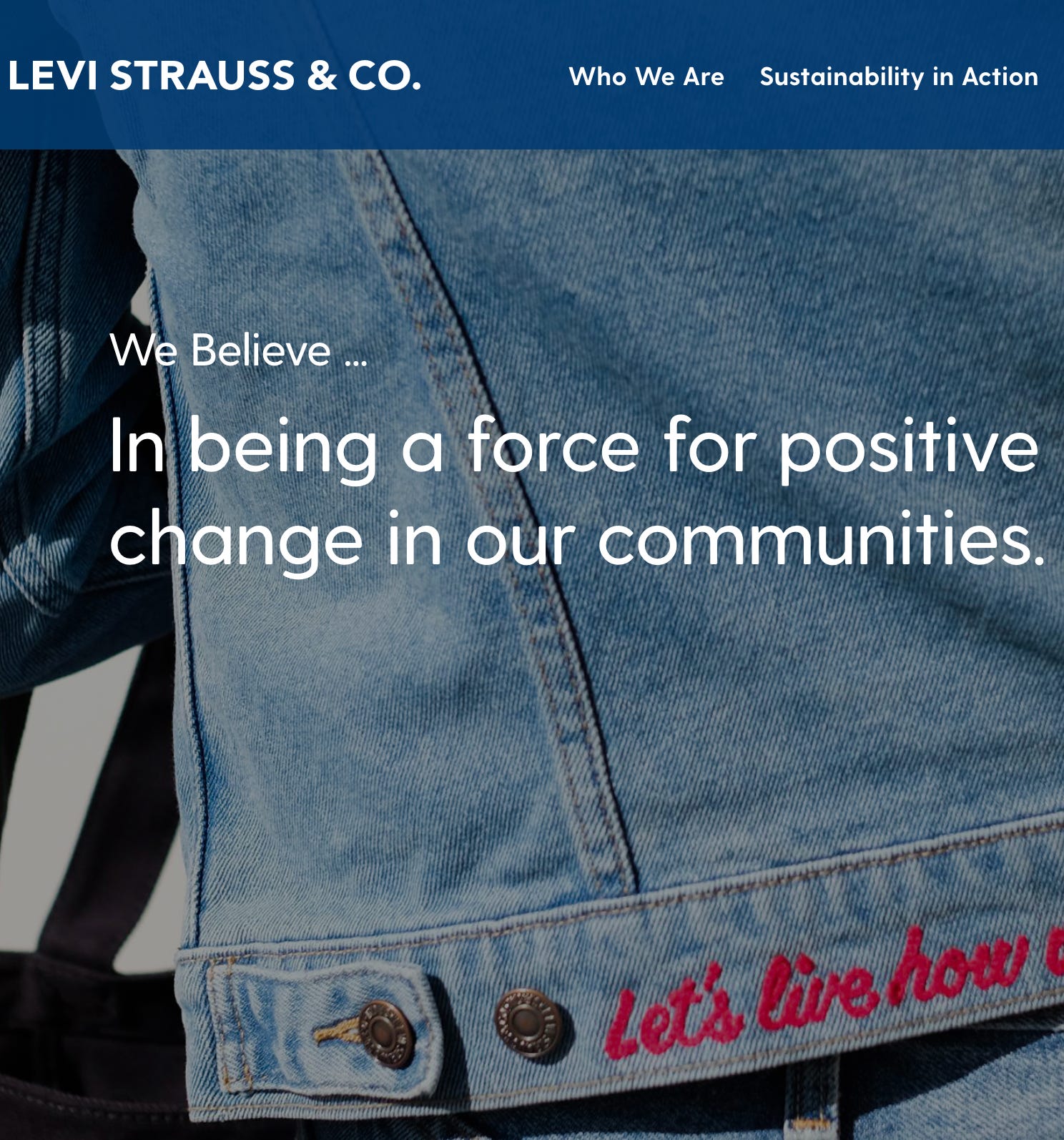
She says she got this impression from the brand’s communications: how they talk about the brand online, in store, and on their products’ labels, like the jeans tags that read: “Original style. Responsibly made.”
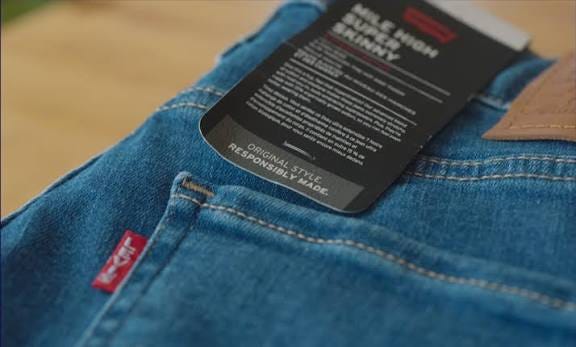
So when Pam read about the firing of 100s of workers at a Turkish factory that produces solely for Levi’s, she felt misled. Listen to the Ep for the full story on what happened at this Özak Tekstil facility.
Pam now joins three other Dutch consumers in a new court case brought by the Dutch office of CCC against Levi Strauss.
Social washing - the new greenwashing?
Emma Vogt from CCC Amsterdam tells me that, in January, they sent a final claims letter to Levi’s before filing the suit. “Their main response so far has been to start removing things from their website,” she says.
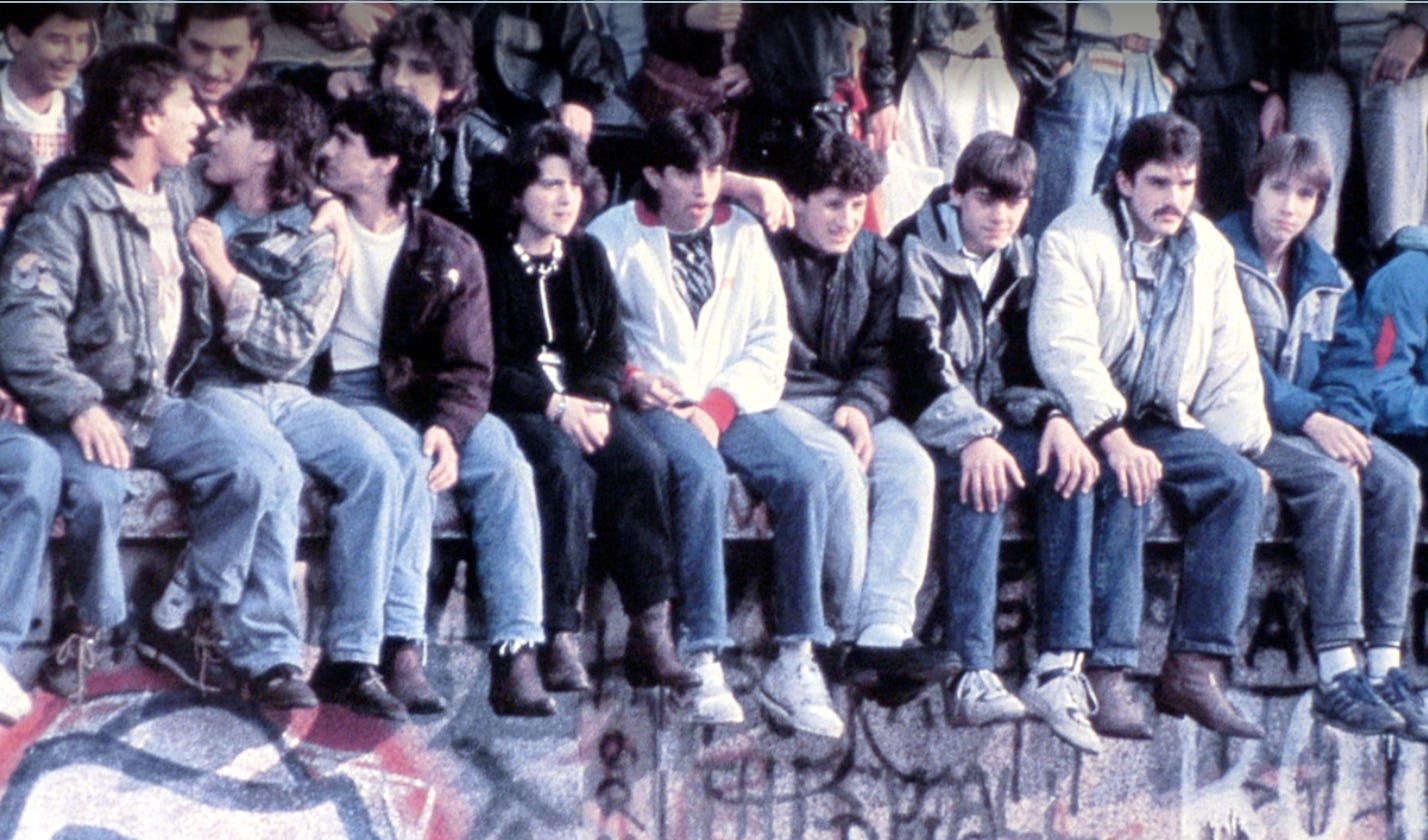
“My favourite example is the claim, ‘We’ve always stood up for what’s right.’”
In one example, this phrase was accompanied by a photo of a person standing atop the Berlin Wall on the day it came down.
Not for long!
What Emma calls “a massive cleanup phase on their website” ensued. “What they told us is that they have removed ‘the outdated information’. Such an interesting choice of words! … How can something like this be suddenly outdated? You’ve just described that in 2026 it’s not longer accurate. That’s very interesting, to say the least.”
As for what this means for the case, Emma argues, not much - the claims against Levi’s relate to purchases made by the consumers in 2024 and 2025.
Consumer watchdogs are increasingly cracking down on greenwashing claims across industries, and globally numerous brands have been fined by the courts for suggesting their products are more environmentally sustainable than they really are. Emma hopes social washing is next in line. If we want to see truly sustainable fashion, we can’t forget the workers.
Thank you for supporting AI-free independent media :)
Clare x
Actual woman behind Wardrobe Crisis. Proudly human-made since 2017.
P.S. Who else is freaking out about the de-humanisation of everything? Shall I write a Substack on this? LMK in comments. I just saw an IG post from Australian Arts Chanel about this thing called KeyComp - apparently it’s just debuted here (in The Lion King) - which allows producers to replace live orchestras at musical theatre performances. How pissed off you would you be to go & see a “live” show, only to find it’s just some knob-twiddler pressing ‘play’ in the pit?
This stuff is creeping in all through the creative industries, crushing jobs - and true artistry - in its wake. That doesn’t mean I’m anti-technology. I am grateful, for example, for the editing software that allows me to cut my podcast together. But that’s NOT THE SAME THING as subbing in AI to do creative work. That my friends is simply cheating.
Workers developing silicosis to make fake aged jeans because people can't be bothered to keep & wear them long enough for them to age naturally. Imagine telling this to a person from 100 years ago, they'd think you were mad. And they'd be right!
The best part about denim jeans is the way they age naturally from dark blue to pale blue. You would need at least twenty pairs of distressed jeans to get this kind of colour verity and the space to house them. Like shoes they need to be worn in to get the right fit. All fashion needs to be sustainable otherwise what’s the point of having toxic cloths polluting us and our environments. This needs to be band worldwide so that we don’t have to call anything sustainable it would be that way from the start. We need to stop money being the new religion and find wholesome ways of comfort. For we when I swap undesirable cloths for ones I absolutely love then I get a natural high witch is my heathy addition.